Monet Magic: DIY Tile Painting Tutorial for a Picture-Perfect Kitchen
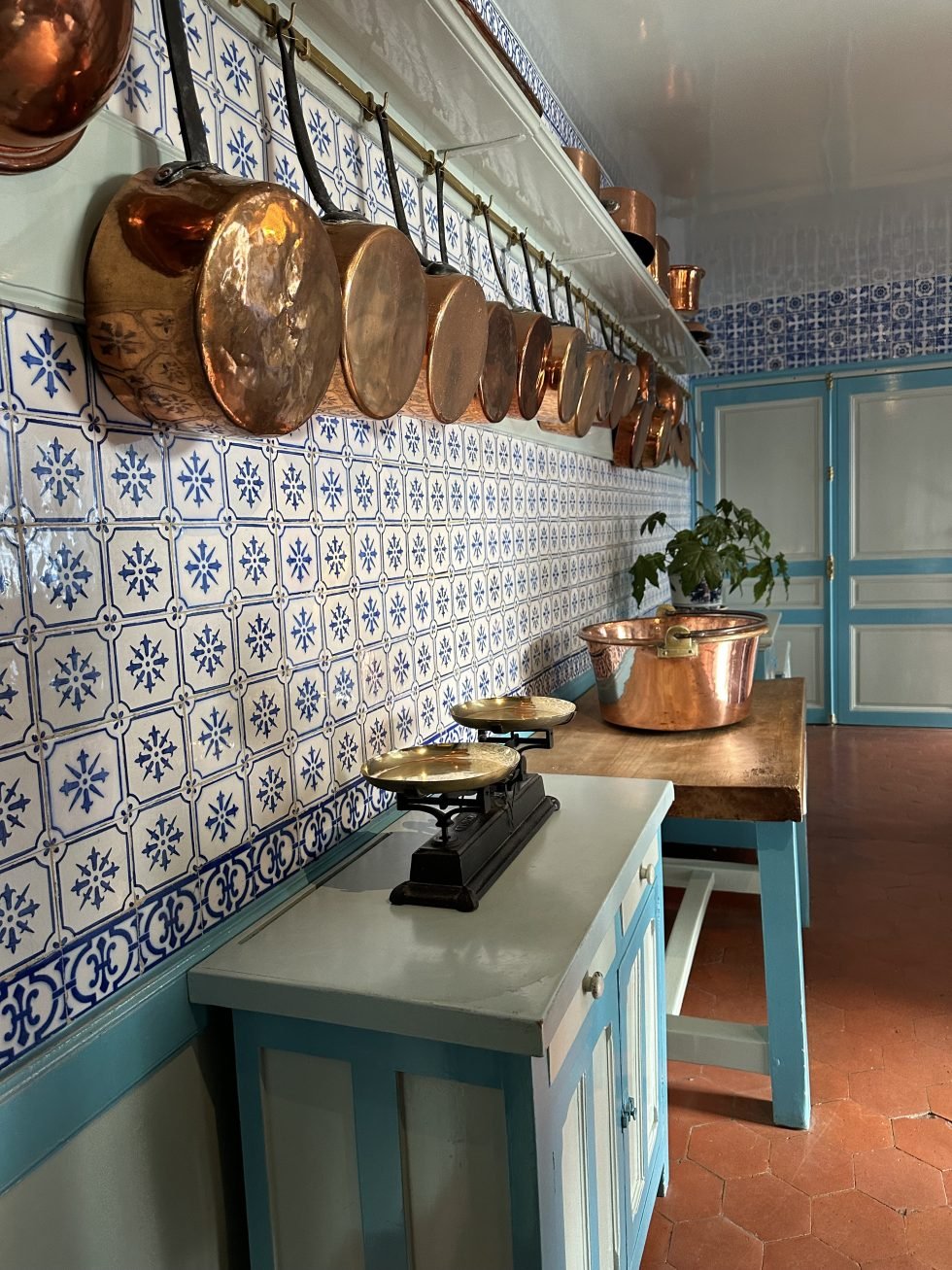
Two things, darling: Want to see Giverny in person? Come to Paris with me in October &
Love all this design stuff? Join my Old World Design Society and become your home’s very best interior designer.
Click HERE for a free week to see what it’s like!
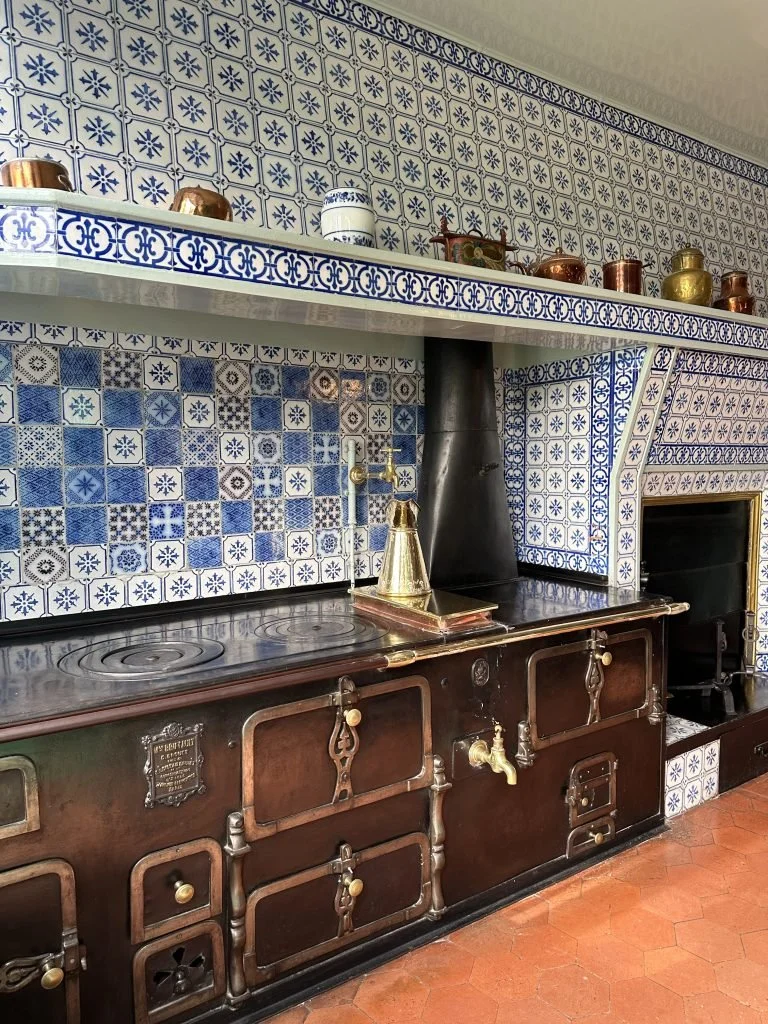
As I shared last week, I’ve got it in my mind that I am going to tile my kitchen like Monet’s.
I’m not crazy – I’m passionate.
Giverny is one of my most favorite places in the WORLD.
In just a few weeks I get to take another group of women there. In the MEANtime, I’ll be here painting tile after tile and I had so many questions about it from last week’s video, I figured this week’s video better address the topic.
I feel you for those of you who are more Delft and less Monet. I was right there with you, it’s just that I’ve had some form of Delft in my kitchen for so many years (as you saw in last week’s photos) that it’s time for me to go BIG or go home as it were and apparently, ‘big’ is me making my very own Parisienne Farmgirl version of the Giverny kitchen.
Let’s talk about painted tile:
The history of tile goes as far back as civilization. Like the floral arranging we looked at during one of our recent Society calls, tile is seen everywhere on the timeline of history. First, the Egyptian, Babylonian, and Assyrian civilizations used tile to decorate their gates, buildings, and homes. Next, the Persians decorated with tile, and the Islamic world brought tile usage to the Christian world via Spain. It was here that the introduction of cobalt blue occurred.
By the 17th century, blue and white tiles had become increasingly important, and in Dutch towns like Rotterdam, Amsterdam, and Delft, commercial tile-making was well underway.
Today we still appreciate these beautiful blue and white tiles. While many European cultures have contributed historically to these traditional tiles, it’s the Dutch and ‘Delft tile’ most of us think of today.
The various designs include human, animal, and landscape, often framed in by a corner motif design of fleur de lis, floral sprigs, or oak leaves so that when applied en masse to a wall, all work together.
Creating your own Delft-style tile is very simple. And while I’ve set out to paint enough tile to cover all of my kitchen walls; à la Monet’s kitchen at Giverney – Should you set out to tile an ample space or add some detail to your fireplace surround or kitchen, you will find that the repetitive aspect affords time for inward thoughts and contemplation and cozy winter evenings.
You will need:
A variety of all-purpose paint brushes
Lid rings for tracing the perfect circle if desired
Tile (standard 4 x 4 generic tiles are the easiest to work with, but you can experiment with tumbled marble as well)
Glass paint (the kind used for stained glass available at any arts and crafts store)
A cookie sheet
An oven set to 325F
If you would like to sketch your idea before painting it, you can slightly wet the glossy side of our tile. Wetting the tile will allow the graphite from your pencil to transfer, and you can simply paint right over it.
Have no fear in mixing your colors. My preferred brand of glass paint can be found here.
I typically paint the interior of my tile first and then the corner motif. Many glass paints are water-soluble, so you can wash the error away and begin again if you make a mistake.
After your paint has dried for THREE days, you will ‘fire’ it in your kitchen oven according to the directions on the bottle. Most often at 325 degrees Fahrenheit for thirty minutes.
I suggest a gray grout* for an authentic look and rest assured when you follow the directions, this paint will withstand all the installation abuse and subsequent wear and tear on kitchen cleaning days. * More on authentic grout lines for flooring will be coming soon!
Happy Delfting, or Monet-ing. Or whatever floats your bateaux.
I’m glad you’re here.
-Angela